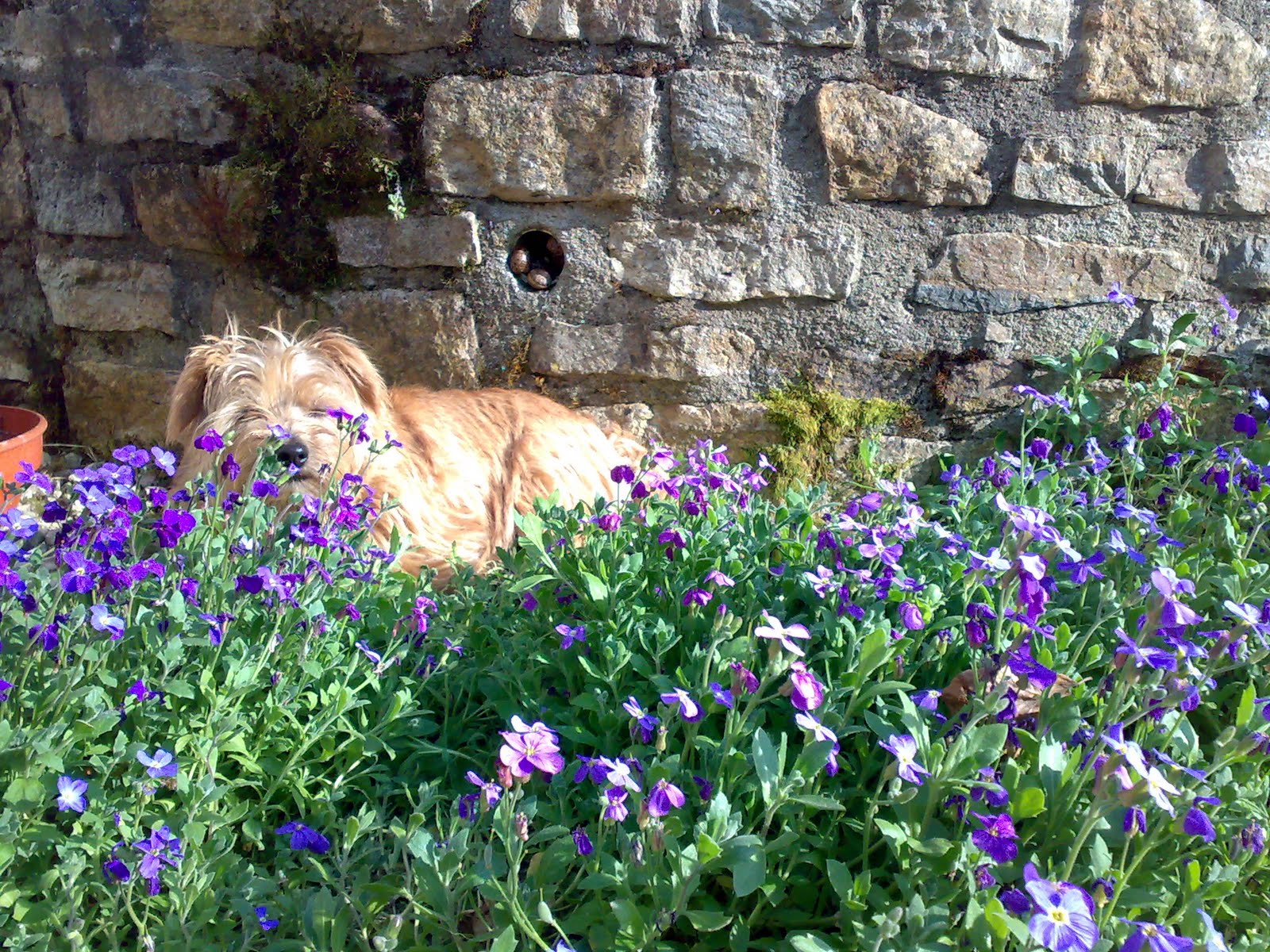
I missed the Marr/Darling interview this morning, as I had an appointment with a creeper. It’s a vibrant fellow that grows up our pergola, and one of those requiring a severe haircut once one can be confident that the last frost is gone. In England, one can never be entirely certain on that score, but as I entered the workshed this morning in search of pruning tools, it did seem to me that Spring had almost sprung. Or at the very least, hopped with some degree of intent to spring.
For those of us who started out with not much (in my case, three sticks of furniture piled on top of green Mark II Mini BKU 351C forty years ago) there is always something quite surprising about being the owner of a workshed. We also have a woodstore and a boot-room, descriptors that sound suitably upmarket on estate agents’ details. And an annexe, raised flower-beds, original Rochdale-cobbled terraces, beams, and an Aga. My wife was brought up with Agas. They represent one of the least flexible cooking forms, but put at least £10,000 on the value of a house. Everything is fodder for marketing these days.
Over those four decades, I’ve tried very hard to get excited about DIY, but these days I avoid it entirely. As one of those kids who was still on the woodwork exercise when others were polishing their handmade pipe-racks, I’ve decided I’m not a chisel and screwdriver sort of bloke. But I’m quite a keen gardener – and one of my favourite tasks is planting, nurturing, trailing and then pruning creepers.
Unfortunately, the complete lack of skill I have in relation to any handyman hardware means that even this can be dangerous. For tall creepers require ladders, and ladders are slap bang in the middle of DIY territory.
I’ll give you a tip about the use of ladders for the pruning of creepers. When handling a very tall and heavy steel ladder, it’s important to ensure you grasp it in such a way that the majority of its weight is below your head. It’s largely a question of mechanics, really: once you raise the ladder from the ground in order to lean it forward against a vertical surface, if there are four rungs below your shoulders and twelve above, the ladder will lean backwards. A sort of tipping-point occurs, in much the same way as 70% of a holed ship’s demise takes place in the last minute of the process.
As one’s elbows head north-west towards the shoulder-blades, the brain remembers a large plate-glass window situate in the ladder’s trajectory of travel, and pleads with the body-trunk to feint in an easterly direction. When this gets no response, it orders the wrists to perform a 180 degree clockwise swivel. The strain of trying to use a ladder as if it was a bloody lasso is indescribable. The ‘CLAGOOYING’ as metal hits raised bed wall produces dog barks that are deafening. Loss of balance is followed by loss of dignity, loss of consciousness, and loss of interest in pruning creepers.
I’ll tell you another thing about pruning creepers with the aid of ladders: once you’ve been asked by the wife just what the hell you think you’re doing (and realised that not pruning the creeper isn’t an option) it’s always a mistake to lean out from the ladder in search of that untidy stem you’re sure you can reach. What’s more, when it becomes obvious that it can only be reached by taking one foot off the ladder, just say no. When that doesn’t work, say to yourself ‘It is the work of but a few seconds to dismount and then reposition the ladder’.
Whatever you do, don’t take one foot off the ladder and rest it on that garden table with the robust and stable air, but which is in reality resting on one wobbly centre-grid with one flimsy leaf either side, one of which your foot is about to (go back to start of paragraph).
The ease with which a garden table surface heads towards an idiot is breathtaking. The speed with which an idiot’s foot heads for the cobbled terrace is surprising. The power of gravity to then yank the ladder off the pergola is terrifying. Becoming the filling for a ladder-and-table sandwich is not recommended.
I remember once years ago doing some staff interview research for the Department of Health, and (as a recce for this) talking to some nurses in A&E. They told me that if Saturday night was the high-point for truculent drunks and knife wounds, Sunday afternoon was the best time to witness surreal injuries. One chap, they told me, had come in with his ear pierced by a metal bird-feeder. It was attached like an enormous African tribal beauty-enhancement to the poor devil’s lobe, and being held up by Mrs Victim to avoid the bloke’s ear being ripped off entirely. The train of events leading up to this result had apparently involved a bag of peanuts, loose guttering, a spanner, three blue-tits…and a ladder.
Thankfully, I did not have to suffer the ignomy of walking into Casualty with my head between two ladder rungs and one leg inserted in a table-top. And to be fair, I can point to the use of ladders in music hall and silent movie comedy as evidence that problems with using them are not unique to me. For Chaplin, Laurel & Hardy, Abbott & Costello and Eric Sykes, no visual slapstick was complete without a ladder. But it was a relief to finish the garden job, walk the dogs and then do nothing more dangerous than read the papers.
 The Slog