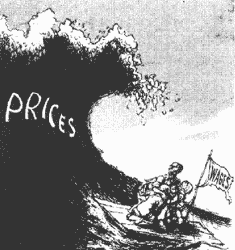
While CPI figures newly released from the ONS are relatively stable, much of the increase is down to Government taxation. The RPI shop data are, however, terrifying.
I doubt if many people could be bothered to notice this, but the new inflation figures out today show that by far the two biggest price increases were entirely down to the actions of politicians. I refer not to their tedious expenses (which remain a disgraceful insignificance) but rather to rises in the cost of smoking (twice the average rate) and driving (over three times above average). Both were directly due to massive tax increases in the last – savour that word – Budget from Alistair Darling.
You have to work quite hard in these data, however, to pull out the main point of significance: that inflation has been steadily rising since April 2009, and at the retail end has begun to accelerate.
Just to keep everyone arguing needlessly, government has for some time been using two sets of numbers, CPI (consumer prices) and RPI (retail prices) and if you can work out the point of this then you’re a better man than I. There’s a third far more meaningfully different dataset dealing with manufacturer and production output costs, and these have already shown (see Slogs passim) that it is costing us more and more every year to buy raw materials….the things that finally show up in retail prices.
What these latest data show is that last effect coming through. While CPI is relatively stable (albeit too high), RPI over the last twelve months has been 5.5% – but a whopping 0.9% this last month alone. That’s got nothing to do with the tax system, and everything to do with the falling value of our currency.
It also spells an inflation rate going forward at nearly 11%.
The value of the currency fell for three reasons: a terrible export performance, the Bank of England printing money (QE), and the deep uncertainty created by a neck-and-neck election.
The higher inflation gets, the more expensive our exports get, the higher domestic prices get, and the weaker our currency gets. This doesn’t produce the benefit it should for us, because despite a steadily weakening Sterling, we are still unable to make things other people want. Anatole Kaletsky seems unable to grasp this point, but most people can.
But distraction about personal circumstances and worries about the deficit have kept most eyes off this data output today: could it be that the laregly Tory press is too busy Coalition-bashing to have spotted what the alternative could have been?
Who cares – what this means is that an essential set of austerity measures are about to hit consumers at exactly the same time as rising prices. Thank you, New Labour.
 The Slog