Exit from the Eurozone may be the only way
for the Greek economy to survive
Every financial and specialist title/channel/website over the last six weeks has used the following words in relation to the Greek situation: loan, debt, deficit, lazy, Goldman Sachs, fraud, spendthrift, ECB, IMF and doomed.
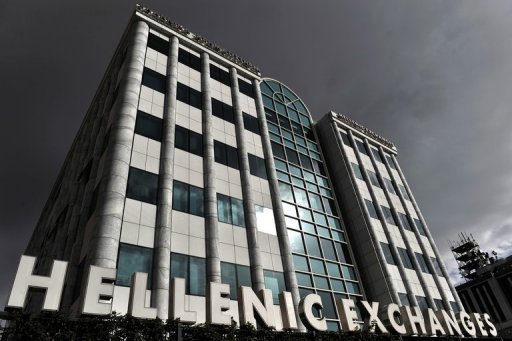
You’d hate to be working in PR crisis management for the Athens Governmen right now. After a while, this kind of negative imagery (spin doctors, hedge funds and credit managers or not) spreads into other things the Greeks have. My perception is that we’ve all been so engrossed with the dangerously delicious excitement of watching somebody who’s not us going bust, the eye has been taken off these other things. Like the Athens stock market, for example.
A staggering £60 billion has been wiped off the Greek market’s value since the start of the crisis. This may seem like peanuts to American readers, but it’s big bananas in the Athenian context: around 14% of the country’s total GDP. The general rule with markets going that bear is that the shrewd money decides when it’s at or near the bottom – and then moves in to buy oversold stocks. This gets tricky if nobody can see a bottom: folks start to think, ‘Hmm – maybe there isn’t one‘. The next station down the line is Catastrophe Junction.
This is starting to happen already. Although the pe (price/earnings) ratios are already a third below normal for a developed country, investors are still steering clear of Greece: “it’s not an opportunity” said one Madrid-based broker to me yesterday. Quite a nice line in understatement, that.
Ben Hauzenberger’s Euroland fund did well even in a tricky market last year. He told the Bloomberg site yesterday, “It’s very difficult to judge if it is too early to go in” – an equally gentle way of making the ten-foot bargepole analogy. Edinburgh-based asset manager Colin Maclean added “there is no obvious value there”.
Toujours la politesse you may think, but my experience has taught me to get worried when obvious euphemisms start emerging from influential mouths; it usually means the train has all but two wheels off the edge of the cliff.
Without any of the fanfare that accompanied Frau Merkel’s shorts-ban, the Greek Government banned naked short selling just under a month ago. The market has fallen nearly 10% since then, thus for once suggesting that conspiracy theorists will find nothing nasty from now on: the fact is,
whoever was or wasn’t involved in Greece’s fraudulent entry into the Eurozone – for that is precisely what it was – its naked fear that’s keeping investors out of Athens, not naked shorts.
What happens next? This morning, chief executive of the EP investment house Sandy Nairn opined that the best option would be for Greece to make an orderly exit from the Eurozone. Nairn believes a 30% weaker exchange rate, through reinstatement of the drachma, would be “the only way to allow the Greek economy to improve its competitiveness”.
This is an interesting development, suggesting – as The Slog has written recently – that the inability to devalue (rather than deficit problems per se) will be what triggers exits from the Euro….and perhaps in the end does for the idea of the single currency.
 The Slog