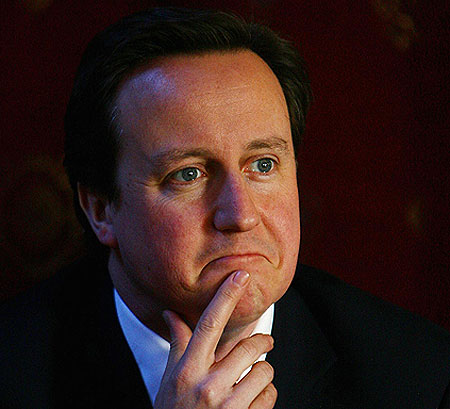
Prime Minister David Cameron caused further dismay yesterday when, on Radio 4’s Today programme, he once again dodged the issue of renegotiating Lisbon and other dysfunctional EU agreements.
In answer to a question about pressing Britain’s case, Mr Cameron said: “I think we’re all getting slightly ahead of ourselves here. I mean, even the eurozone doesn’t have any unanimity about whether there should be a treaty. They clearly are looking at rule changes and things that need to be changed to make the eurozone work better, and we should encourage that because we want a working eurozone. The issue of the treaty hasn’t yet arisen properly, and it may do, it may not do. The rule for us is very clear – that we don’t support treaties that transfer powers from Westminster to Brussels.”
Sticking rigidly to the concept of no further power transfers lays the PM open to charges that on his own Party’s admission when in Opposition, the LisbonTreaty had transferred far too many powers from Westminster to Brussels in the first place. In this context, he is lagging well behind the German public.
Die Welt reports that the first eurozone aid package, providing €80 billion to Greece, has two potential ‘exit’ clauses. The article notes that if a constitutional court in any eurozone country considers the aid package to be illegal, then the country may refuse to take part in the bailout. The second exit clause states that if a donor country must itself take out a loan to help Greece, and the interest rate is greater than that at which it will lend the money to Greece, the donor country is able to obtain the difference from other eurozone countries. If the eurozone countries refuse, donor countries can refuse to participate.
The Tory leader is putting his blind eye up to the telescope here. This may keep Nick Clegg’s LibDems happy, but it is playing dangerous games with a Conservative Party impatient for signs of radical action in relation to EU folly.
 The Slog