 Some folks are enjoying Western discomfiture more than most
Geopolitical events on the fringes of the EU are going unmonitored
Now that Standard & Poors has sent ‘a warning’ to every country and bank in the eurozone, I think perhaps we should know what it was about. Locusts ascending from the south? Is the phone bill overdue for payment? Or might it be that, while everyone’s pretending that they have important things to decide in Paris, other things are happening in the world?
It’d be good if it was the last of these. There has never been a local problem in history that wasn’t being observed in a malign manner by somebody somewhere. Two obvious and immediate examples are Iran and Russia….and they aren’t mutually exclusive.
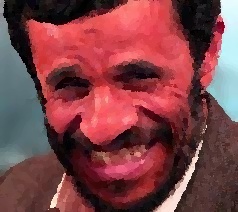
During yesterday and overnight, bits and pieces have been falling out of the disaster represented by the loss of a US Sentinel UAV (unmanned drone) over Iran. Sources are now clear that the cutting-edge craft landed intact and will be of inestimable use to the Iranians, and their allies China and Russia. It also looks 90+% certain that the plane was on a covert mission to trace the exact underground location of one or more Iranian nuclear facilities. And although the mission and those involved in it are ‘complete deniability’ assured, there are indications that the operation was undertaken with Mossad assistance. If we ever wanted a clear sign that Israel and the US are preparing to take out Ahmadihnejhad’s nuclear capacity, this was it.
But in the more immediate term, this is the second time in a year that a botched US mission on away ground has left cutting-edge military secrets behind for others to find. It seems likely that the Iranians and Russians wouldn’t know which way up to hold a Sentinel, but that’s not true of Beijing’s scientists. Iran could earn itself a terrifying quid pro quo in return for passing the wreckage on to the Chinese regime: and I understand this already has Washington in something of a flap.
What would the West do, for example, if a few weeks from now Beijing suddenly up and said that it supported the fundamental right of all poor countries to have access to cheap nuclear power for development purposes? Suppose there was even a small hint at the end of the release, informing all-comers that acts against such countries would be regarded by China as ‘acts of imperialist terror’? Do we think President Obama would have the bottle to deal with that one?
The Chinese would have an excellent motive, assuming they’d done a deal to use Iran as a strategic base: it fits perfectly with their ambitions in the south-east Mediterranean, and is yet another foothold in the region stretching across and down to Africa. And of course, Iran is rich in oil.
Oil is another subject that’s gone off most people’s radar during the debt crisis, but it remains the most important strategic fuel-form on the planet….and Russia is rich in it. In terms of influence, Russia did badly out of the ‘Arab Spring’: having worked assiduously for ten years to encourage revolutionary groups there, the move has since backfired – handing power, predictably, to nationalist Islamic groups by and large. Libya was a major geopolitical loss for the Kremlin; and with Syria in meltdown, the last thing Russia needs now is the Chinese installed in Iran.
But other events are playing into Moscow’s hands. The original strategy behind middle east destabilisation (interruption of oil-flow to the West) looks set to come to fruition before too long: in more than one of the ‘liberated’ Arab countries, one of the first things done by the victors was the setting up of not just oil deals, but also strategic groups designed to bank the maximum money from selling it….and model the effects of not selling it. Even for the Sons of Allah, there is still a temporal world. Further, events of late surrounding the chaotic management of eurozone debt have spiralled out of control. When it comes to foreign policy at the minute, the EU just isn’t paying attention.
For a net seller of oil, the fact that the eurozone is now quite obviously heading for the mother and father of all recessions is bad news in the short term. But as the dust settles, and those in charge of the EU become increasingly desperate to stimulate recovery, a boom in one form or another (however manufactured) will come. If, from Tunis to Tehran, very little oil was available to Europe from the region, then Mother Russia would be sitting pretty. Ask the Ukrainians what happens next: they’ll be happy to tell you.
If the EU breaks up in disharmony and bitter recrimination, then things looks even better for the Kremlin….if the occupants of it still retain imperial ambitions. The most likely leading occupant will be Vladimir Putin, and he is not a man at peace with himself. This is especially true now he’s seen the most recent election results. The Russian media online (or that part still operating free from State interference) suggests that the figure of a 49% poll result for Putin’s United Russia was massaged up quite a bit: the real score might have been in the 33-37% range.
Be assured that there will be a clampdown. The State is already obstructive when dealing with the registration of a new Party, and Putin’s main rivals know they will be harassed and their offices raided. This morning there are reports of anti-Putin demonstrations. Those around The Leader won’t allow too much more of that.
Once reinstalled as President, Vlad the wannabe Invader will probably be on the front foot properly for the first time in the supreme role. Graft, mafiosa influence, Russian stubbornness and Western recession mean that economic growth has stagnated of late. But with China becoming the biggest consumer of oil – and the potential for interruptions in supply to the West – Putin could relatively easily invest in economic development – and the average Ivan’s standard of living. With more popularity behind him, and an EU in disarray, he is going to be a much bigger player in European politics than he was in the last ten.
The wild card as always with Russia is the almost total dearth of reliable financial data. In the light of severe world recession, Moscow might suddenly be revealed to be in something of a mess. But unlike the EU and UK, it has something vital to trade. Are we going to find ourselves, five years down the line, with a resurgent Germany squaring up to a bellicose Russia? Would we want the Germans to have nuclear weapons, assuming that by then the US had pulled back from European involvement?
These may seem alarmist and fanciful as questions. They are not: the world is changing, and those charged with strategy both here and in the eurozone have their eyes completely off the ball of geopolitics. Yet another reason why a swift resolution to 24/7 concerns abou EU incompetence would be welcomed by many people of many viewpoints.
 The Slog