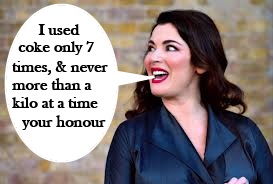
 All things in moderation
It’s been a funny old day.
Tim ‘Taxis’ Yeo MP has had yet another emission, demanding a ballot of Conservatives after the local party dropped him as its parliamentary candidate for 2015. Cruella de Yeovil has called for a ballot of the association’s 600 members next year, because he seems to think they’re out of touch. Well good luck to this fine man, but I’d like to be the chap who designs the single-question, 3-closed end alternatives questionnaire as follows:
Please select the ONE of the following alternatives which most closely resembles your feelings about Mr Timothy Yeo’s deselection as MP for South Suffolk:
* We should reinstate him as our Parliamentary candidate
* We should accept the verdict of our local Conservative Association, and deselect him
* We should reject the Christian restraint of our local Conservative Association, and instead condemn him to death by breathing his own taxi fumes.
The third alternative above is reproduced here by kind permission of the Sharia Law Reform Society.
………………………………….
Mr José Viñals, financial counsellor and director of the International Monetary Fund (IMF) yesterday granted an interview to The Wall Street Journal.
At the time, he was visiting Frankfurt to promote a new book on financial integration in Europe. He told the WSJ, ““Nowadays inflation is below 1%. This is not satisfactory. The ECB will have to continue doing as much as it can in order to support price stability”.
I feel for his angst: if I’d slaved on a book about eurozone financial integration for months on end – only to find it about to be rendered pointless by the euro itself – I’d be a bit pissed off too. However, a few things strike me as just a tad odd in his outburst.
First, inflation at 1% would’ve been the ultimate wet-dream of every European politician thirty years ago. It’s about as close to price stability as you can get.
Second, I do not recognise this 1% level of inflation as bearing any resemblance to what’s happening in Europe. I note that my income has declined by 60% and – over the last four years – my cost of food has increased by circa 18%. I never got as far as pure maths at school, but the 15 – 60 = 1 equation still doesn’t work.
And finally, given that Mario’s ECB is now the unfortunate prisoner of Geli und Wolfie (Raubrittern) Gmbh, what makes him think theECB any longer has anything to do with anything beyond taking the Rap?
Lest we forget, business in the ezone is doing even less, er, business than in the rest of the EU States left out of the Great Adventure: eurostat reports that production fell 30% less in the EU28 than it did in the blissfully privileged eurozone, October v September this year.
In more detail on October 2013 compared with September 2013 in Europe, production of energy fell by 4.0% in the euro area, but only by 2.7% in the EU28. Durable consumer goods decreased by 2.4% and 1.5% respectively. Capital goods dropped by1.3% in the euro area, but by 0.9% in the EU28. Non-durable consumer goods declined by 0.9% and 0.8% respectively. Whereas Intermediate Goods increased by 0.4% in the euro area, and by 0.5% in theEU28.
…………………………..
George Osborne asserts that he is creating a ‘quiet revolution’ on corporation tax cuts, a claim that strikes me as a hostage to fortune given the noisy reaction it might yet produce. Britain’s larger corporate businesses have so many ways to avoid tax already, lowering their CT rate is a bit like giving Silvio Berlusconi time off for good behaviour while fighting against his prison sentence.
In July of this year, A Lords Select Committee concluded that the Treasury ‘faces a serious problem of avoidance of corporation tax, due in part to the complexity of the tax regime in the UK, but mainly because the international tax system gives multinational companies opportunities to shift profits between countries in ways that reduce their liabilities in the UK’.
Among many other things, the Committee recommended that the Treasury ‘undertake a fundamental review of the UK’s corporate tax regime, including the differential treatment of debt and equity. The present system can encourage multinational companies to take on excessive debt in the UK, including by borrowing money from an overseas subsidiary, to reduce their tax liability’. Particular points of note were:
- The Government should consider a new system of regulation for tax advisers with the threat of removing advisers’ right to practise if they breach a regulatory code of conduct by promoting ‘blatantly contrived’ tax avoidance schemes.
- There needs to be better parliamentary oversight of HMRC, so that the public can be confident that tax deals it agrees with multinational companies are appropriate.
- A new requirement for firms with large operations in the UK to publish a summary of their corporation tax returns to ensure there is clarity on what tax has been paid and to enable Parliament and the public to see when action against tax avoidance is needed.
- HMRC should be adequately resourced to deal more effectively with multinationals and their tax advisors. The report is critical of the practice of HMRC employing seconded staff from the Big Four accountancy firms.
I’m left wondering whether George is undertaking a quiet counterrevolution in the light of that. If so, he may be tempting a noisy revolution involving lampposts, tumbrils, and falling blades.
 The Slog