The Slog keeps on asking the questions, but the bankers, bureaucrats and politicians don’t have the answers. Two days ago we asked Jean-Claude Trichet (the head of the European Central Bank) ten questions. We have yet to hear from him, but the two main ones were first, how do you think this slush-fund for the Greeks will play with The Workers being asked to take pay cuts? And second, why would a currency trader do anything right now other than sell the Euro – given you just hocked it to fortune?
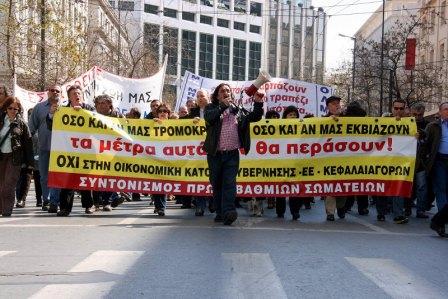
There is now a general strike in Greece. Millions of Greek workers are taking part in the stoppage, called by Greece’s two major umbrella unions, the private-sector GSEE and the public-sector ADEDY, amid widespread discontent over austerity measures.
In the center of Athens, tens of thousands of protesters gathered in one of the largest public demonstrations in years, with unconfirmed estimates that the number could have topped 100,000.
The Euro meanwhile is on the slide: almost every currency in the world has gained at its expense. In two days, the Dollar has risen 2%, the Pound 1.5%. Stock markets have tumbled following the ECB guarantee. The FT today noted that
‘The trigger for those declines appeared primarily to be fears that contagion from the Greek fiscal problems could spread to other eurozone nations, such as Portugal and Spain’.
The crazy decision to tie all EU fiscal futures to Greece was the classic politicians’ answer – but as we predicted on Tuesday, the danger to the euro as a currency is now incalculable. It has, said the FT, made Wall Street ‘find the possibility of further eurozone fiscal funk a troubling prospect’, after weeks of shrugging it off.
Reflecting the German perspective, ECB council member Axel Weber said Greece’s fiscal crisis is threatening “grave contagion effects” in the Euro area. Juergen Michels, chief European economist at Citigroup Inc. in London, told the Bloomberg financial news site that Weber “knows that if Germany doesn’t ratify the Greek aid plan rapidly we’re facing more turbulence in the weeks ahead.” Bloomberg also reported that
‘Contagion from the Greek deficit crisis swept through European credit markets today, triggering a surge in the cost of insuring European banks against default to a one-year high, and driving Spanish and Portuguese debt swaps wider. The euro dropped below $1.30 to its lowest level in more than a year.’
Jean-Claude Trichet has made a catastrophic error by giving in to political pressure on financial guarantees to the Greeks. He may revel in the fact that he has forced Germany’s hand – but the Germans will take a long time indeed to forget how they have been pulled against their will into this quicksand of fiscal indiscipline. Portugal and Spain are smiling in the face of Trichet’s credit-line of salvation; but without German money, the Euro cannot now survive. Whether Germany truly wants to be its saviour remains to be seen.
 The Slog