The editor argues that ‘the Recovery’ on both sides of the Pond was a myth
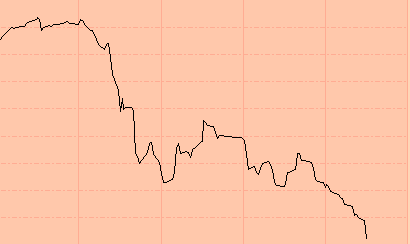
As the Dow Jones index had its worst 8-day run since October 2008, most traders breathed a sigh of relief at close of play yesterday: once again the weekend had given the world’s markets a breather.
Much was made of the US jobless payroll figures (most of it contradictory) but personally I thought the most striking stat of the day was that a higher percentage of Americans are jobless now than at any time since 1931.
October 2008 and 1931 are not dates that suggest happy days may be here again, and the gloom deepened when Bank of China up and announced a £7billion rights issue. After blinking twice, most people asked “Why?” but none of the potential answers represent much of an upside.
In the UK, the Left returned to its heavily-worn theme about ‘falling back into’ recession, and in the US many continue to chatter about a ‘double dip’ recession. Neither of these descriptions is empirically accurate, and this may reflect the fact that they emanate from folks with an agenda: The Labour Opposition in Britain is desperate to show (along with it Keynesian academic allies) that cutting the Under 5’s Against Fascism budget will destroy the recovery; and in the States, FDR-Deomocrats facing a GOP hungry for swingeing cuts are trying to pull off the same wheeze.
The flaws in the spend-to-pull-through thesis are threefold. First, it’s pointless to use FDR and Keynes as Gods when both countries’ finances were in far better shape in 1931, India was a British colony and China was asleep. Second, it’s equally pointless to have a booming economy, but a debt to service that no lender anywhere believes you can afford to pay back. But above all, there never was a recovery to nurture in the first place.
The US payroll figures confirmed this quite clearly yesterday: cut State jobs, and the private sector can’t replace them on its own. The US has lost – literally – millions of ‘real’ private sector jobs since 2008. And although most of the British media missed it, the figures here in the UK have shown precisely the same thing but in a slightly different way, viz, the employment growth evident earlier this year was largely in the administrative State sector generally – and suspiciously, in the NHS mainly.
The clinching factor for me is that the economies on either side of the Pond share one very significant syndrome: non-contract and part-time employment going up – but full-time jobs heading south rapidly. This is simply socio-economic anthropology in action: employers are nervous, and therefore only hiring people they can de-hire at a minute’s notice.
All of this is what one expects of two empires in different stages of decline – but no new ideas about what to do. While America may whinge about the cheap Yuan, the real underlying problem is that US workers get paid a whole lot more than their Chinese equivalents: so not only can US consumers gorge themselves on cheap imported junk, American products (as they stand) have little chance of penetrating their Chinese equivalents.
William Hague’s speech about ‘bold new directions’ for British trade was a welcome bit of marketing reality outlined by this column some weeks ago – and also a side-swipe at the EU. But in the country (and business) at large, the support for a radical shift away from trade with the EU remains at best lukewarm. This is a tragedy, as staying even closely alongside this terminally self-destructive Union will damn Britain for generations to come.
The Slog has not stepped up and focused its critique of the EU for the fun of hitting large and easy targets; UK voters need to wake up to the fact that profound euroscepticism is no longer reserved for those in the Bonkers Party – and the Conservatives (once at the post-Coalition stage) also need to take this on board. The EU looks only inward and its members look only after themselves. It is strangled by self-serving anti-libertarians contemptuous of democracy. But most damning of all from the commercial perspective, outside of Germany its overriding compulsion is to spend and share out – not create wealth.
I detect absolutely zero evidence among any of the vain political leaders and control-freak EU bureaucrats that the fiscal, social and trade directions currently being followed by the European Union must be not just reformed, but in most cases reversed. This is, I think, the most powerful reason for taking the first opportunity that comes our way to disengage from it. Both the insensitivity of Van Rompuy, and the fiscal meltdown waiting to happen, should present us with more than enough of such opportunities.
 The Slog